Mastery and Mystery
The book of Kells

This manuscript, this 1200 year-old miracle, is truly a passageway to the supernatural. You can’t just look; you have to watch. And listen. The scribes and artists who dedicated their lives in a small room in the medieval monastery will speak. But you have to listen.
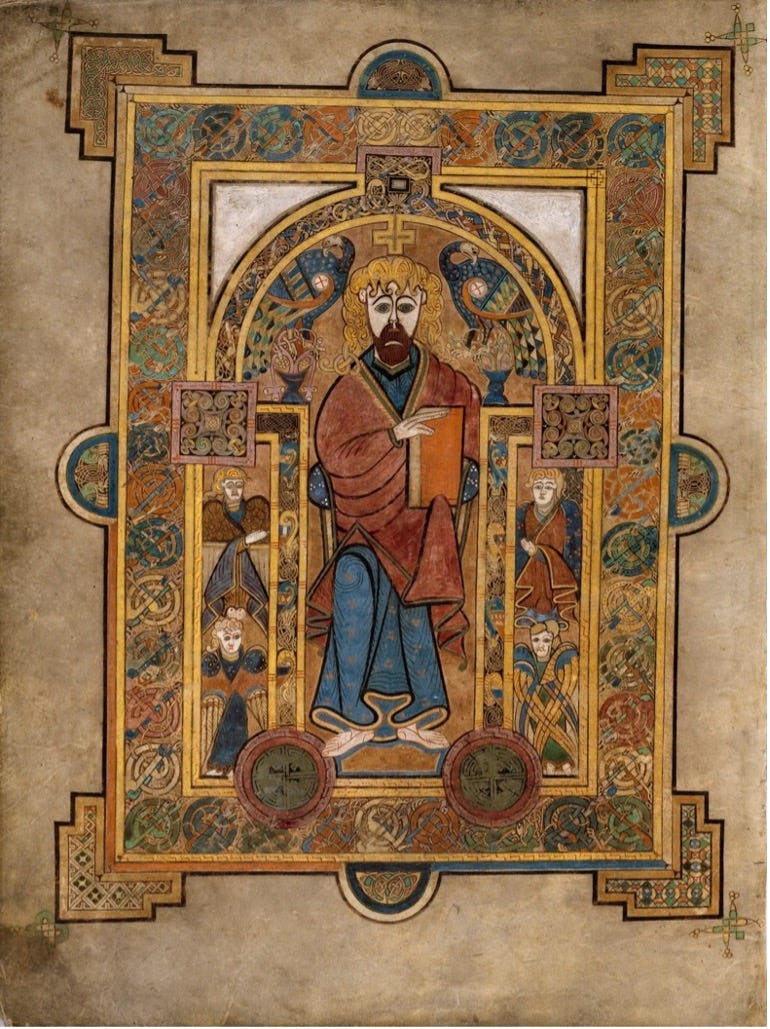
I was consumed by this miracle when I saw it at the Trinity College Library in Dublin a few years ago. The conversation arose out of my immediate questions about the design, the details and the size and placement of the figures. The symbolism can be bewildering even to the scholars.
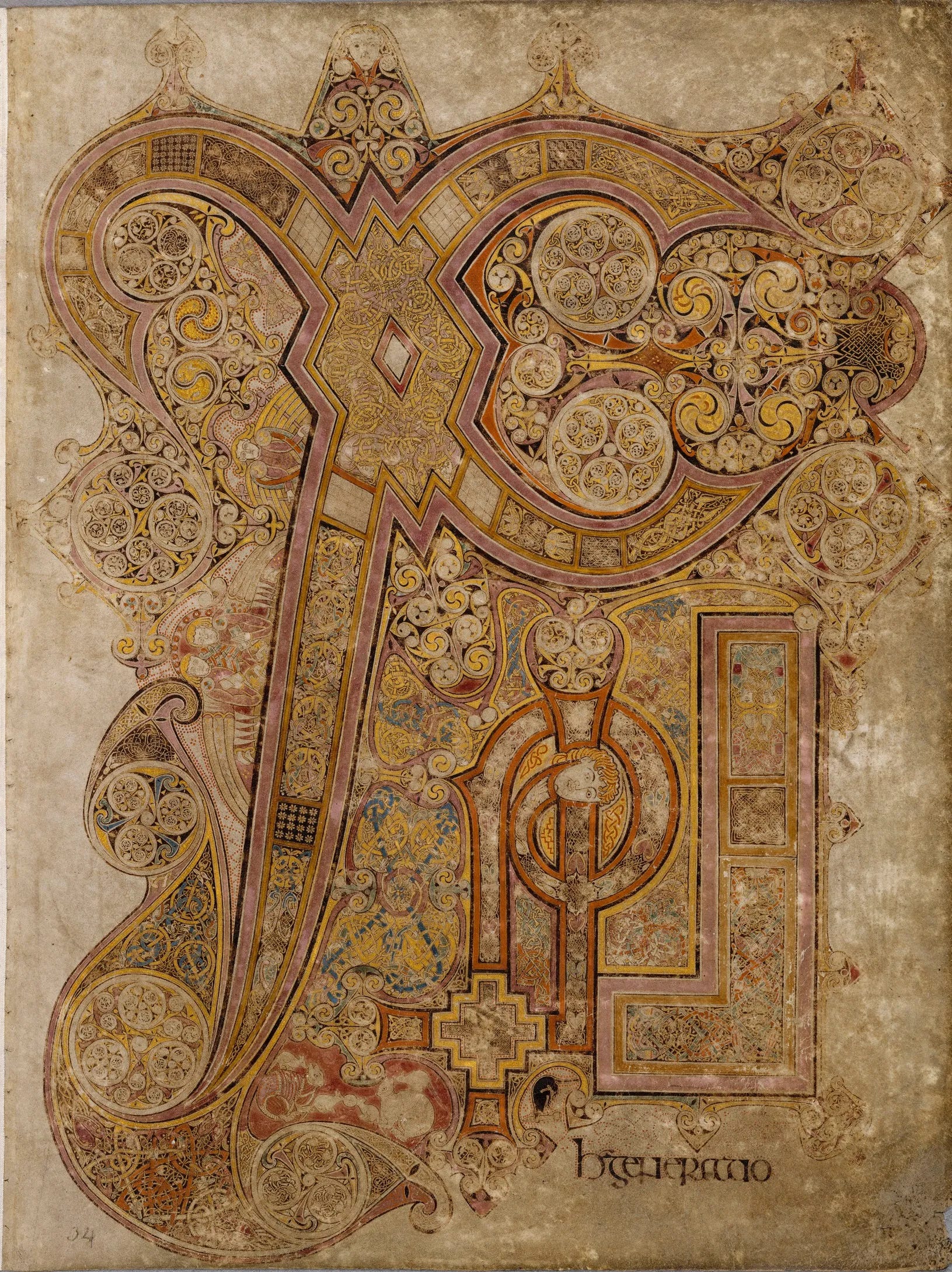
The manuscript has been extensively studied using modern technology such as Micro-Raman-Spectroscopy. Yet the Library’s official guide states, “…it is not known how some of the microscopic detail was achieved.” Yes. “Microscopic detail.” From the year 800!
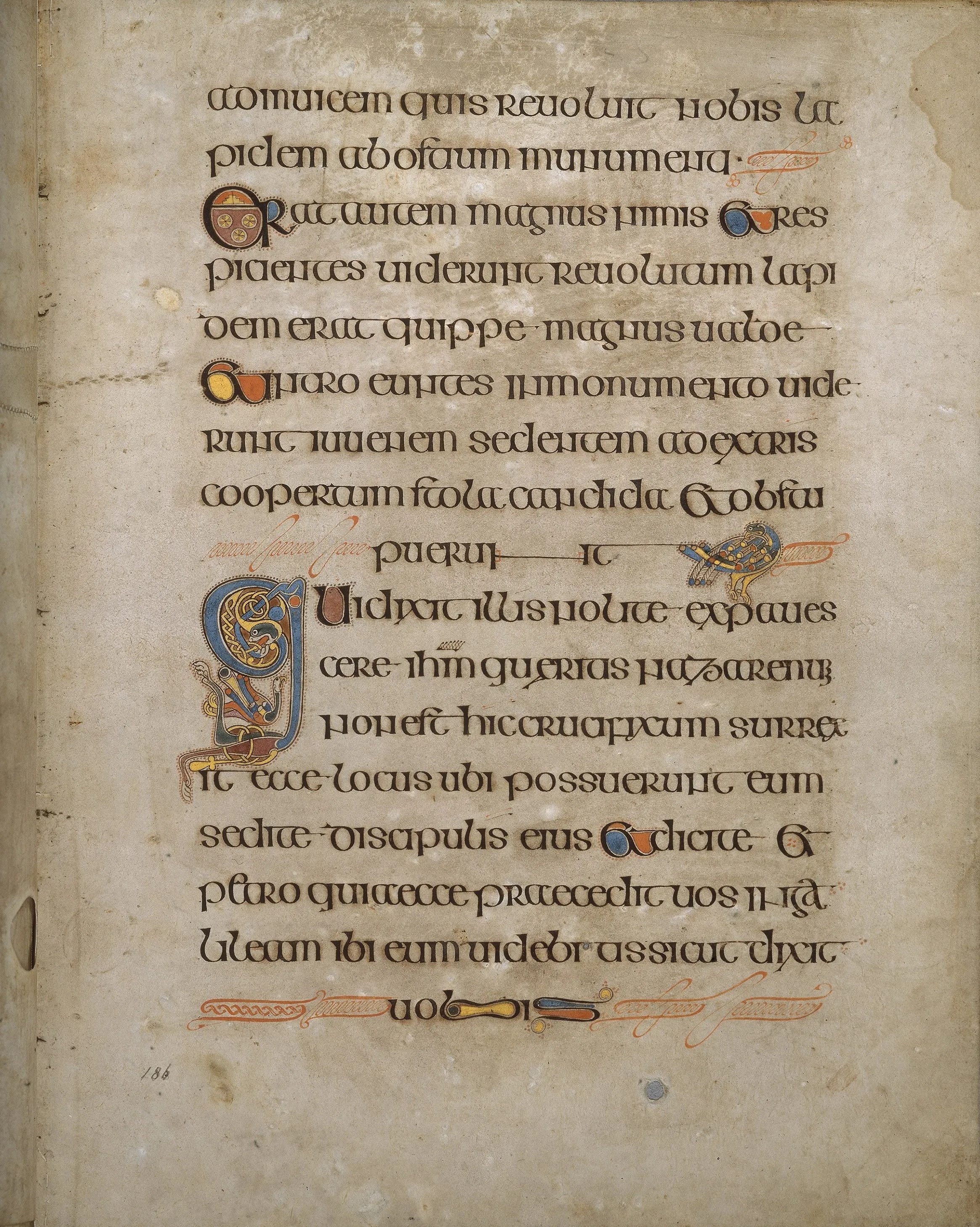
This is the story of the life, death and resurrection of Jesus as told by Matthew, Mark, Luke and John. It is not a text book. Nothing is literal. The stories can be told in abstracted circles or other geometric shapes. Sacred personas can be seen as lions or peacocks. John is seen as an eagle. Fish, snakes, goats, doves, wolfs, cats and other symbolic creatures appear but have meanings that have to be deciphered from the lines of text.
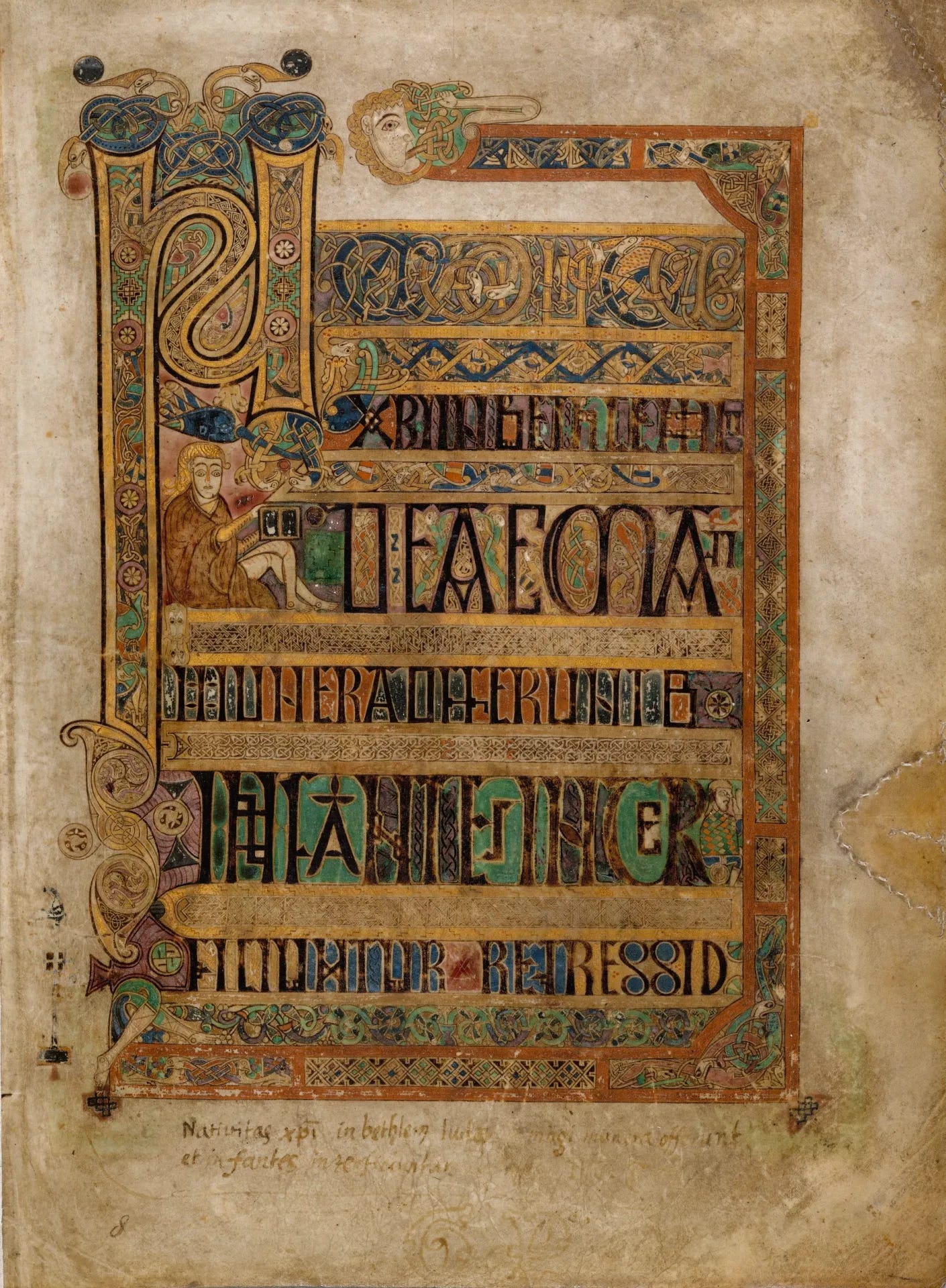
Yet, the paintings don’t always coincide with the text. Artists will be artists. That humanness entwined with the spirits they partnered with created a timeless masterwork that is truly spiritual. And the scribes also could get a little crazy with the text once in a while—erratic. But that of course is, again, just humans being humans.
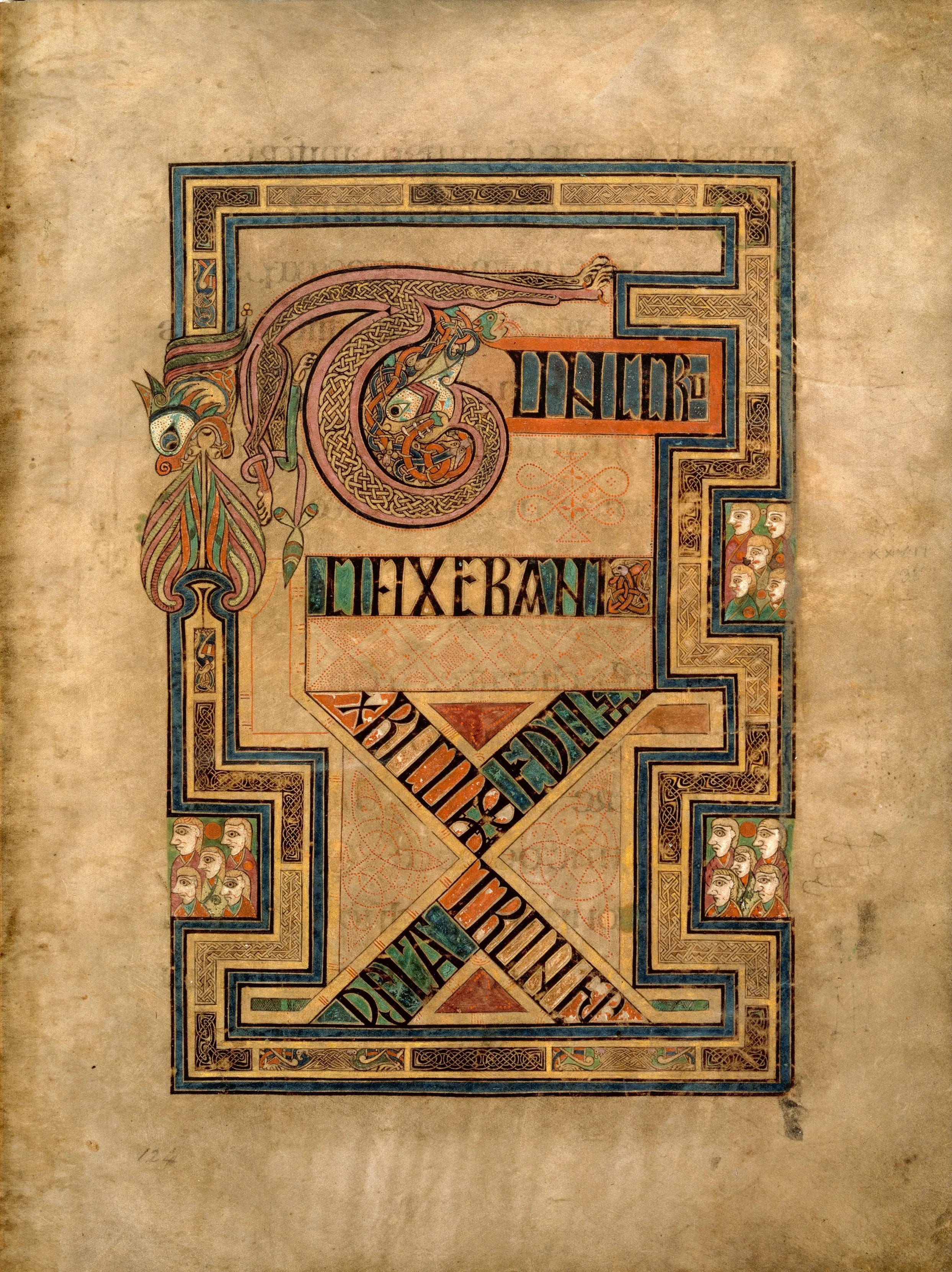
So, my conversations with the artists and scribes have continued. I hear their voices the more I try to connect as an artist and writer. The PTSD helps—it takes me to an unlimited emotional place. And of course, for the artists, time and distance doesn’t mean much when you’re dead. The individuals have never been identified by name, but they have individual personalities just the same.
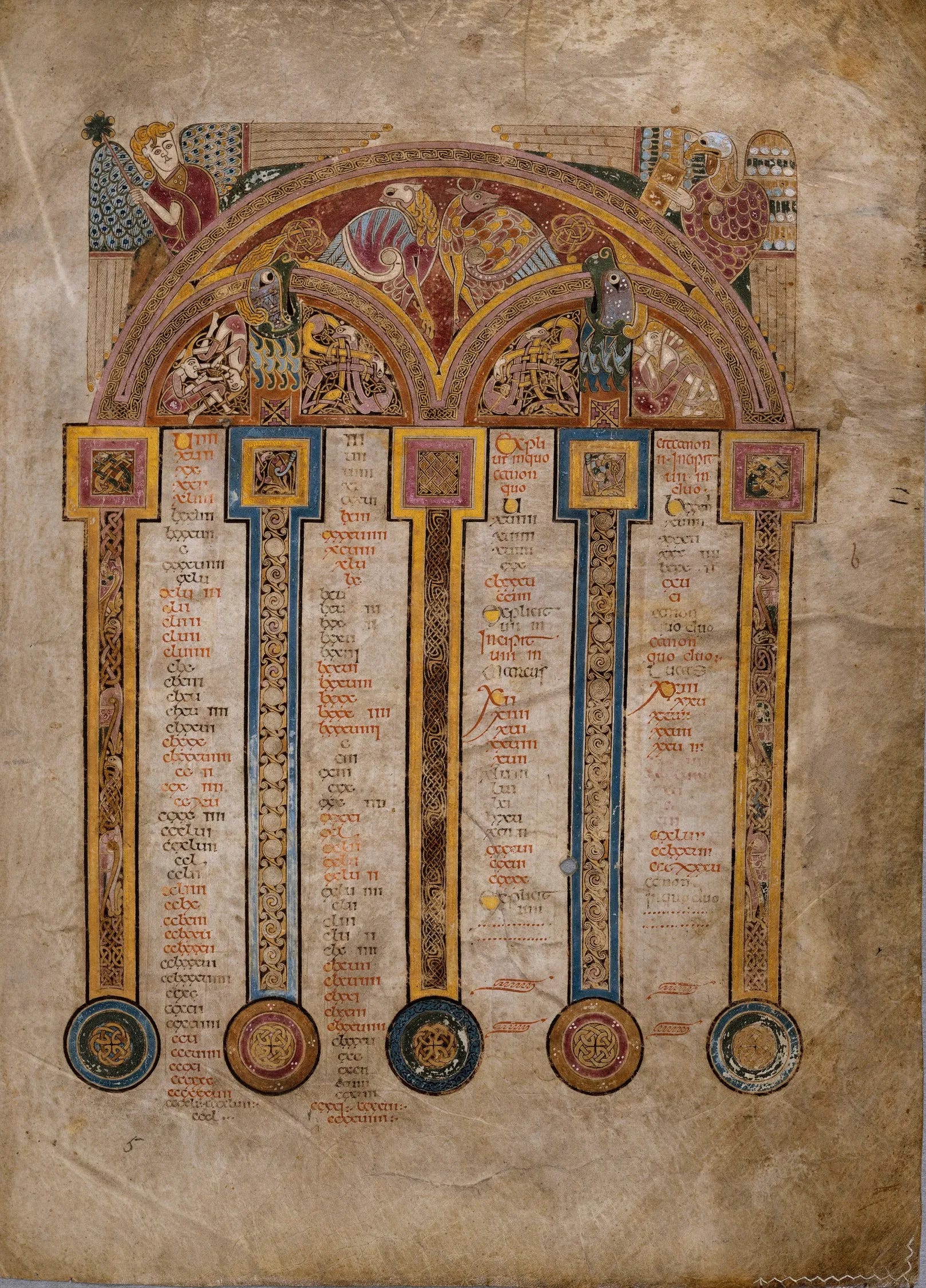
They want to tell you, happily, about their faith and connections to the gospels. They saw everything through the eyes of the apostles, and their hands were guided by angels. But they also had the freedom to use their own skills and judgement to choose their ink and experiment with colors: lead oxide for red, arsenic sulfide for yellow (be careful with that one), gypsum for white…
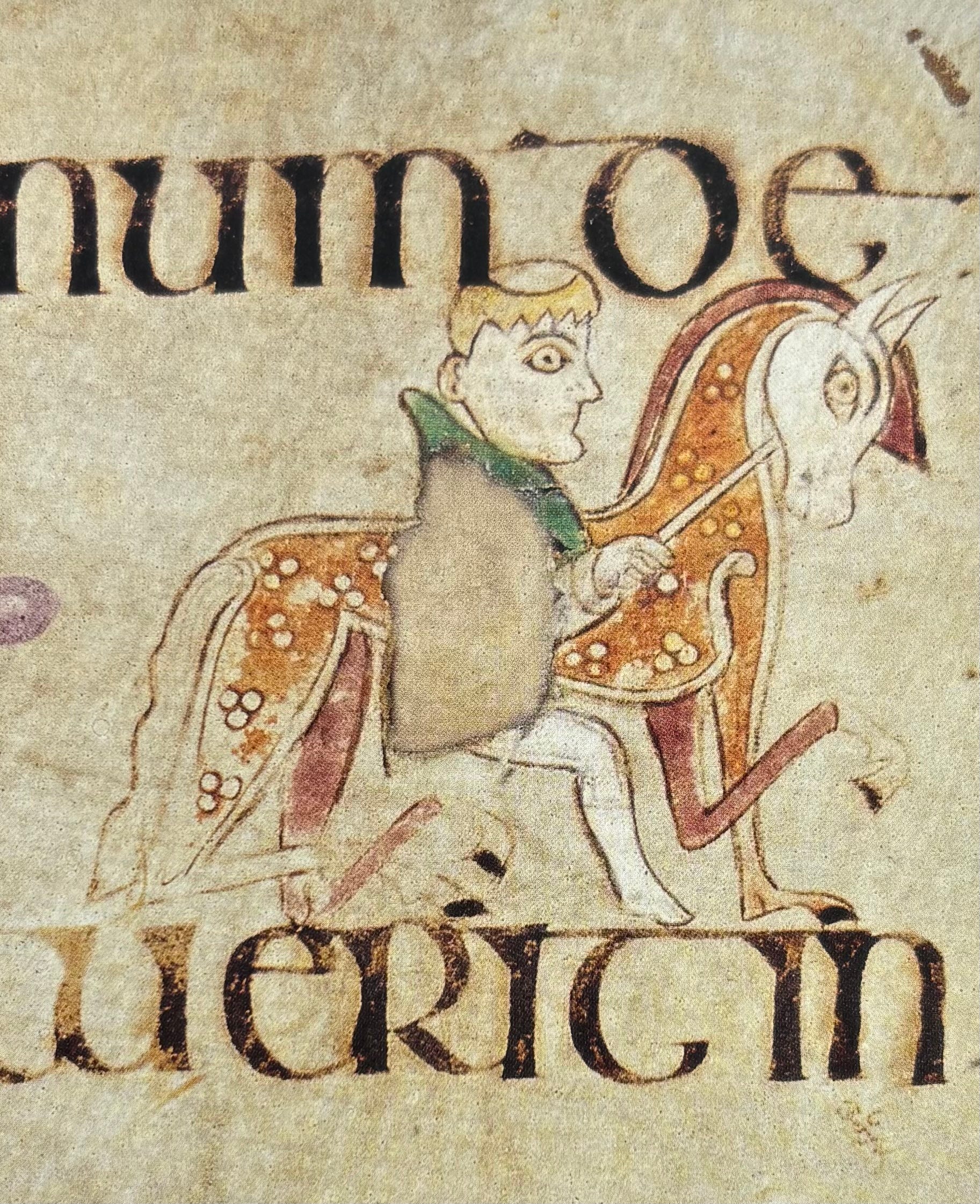
One artist used verdigris with a high copper content to create a bright green for the cloak of Jesus. “Heavens to Gabriel,” he told me, “it glowed! It really lit up, but alas, it was unstable and mostly disappeared over time.”
There are many books and papers. The various scholars will disagree and debate. But in their academic pursuit, there doesn’t seem to be much conversation with the monks who poured their hearts, intellects and souls into this, the all-time supreme interpretation of the gospels. It was not intended to be reproduced for the masses. This was long before the printing press. It was a singular dedication of faith and tribute to God for giving them, all of us, the gift of art and original thought.
You may never get the chance to see the actual manuscript, but look, watch, the reproductions and place yourself in a room in a medieval monastery. Speak with artists and scribes and look out on the gardens and fields that harbor the creatures of Nature that are fervently included on the vellum pages of the Book of Kells.
This was excellent! So glad you covered the Book of Kells from an artistic and spiritual angle- I have never known much about the Book, but this has inspired me to view more images of it and read about it.
Makes me want to travel to Ireland to see this in person.